How much soil a raised bed really holds
Every spring the same thing happens at the garden centre: someone wheels twelve bags of soil to the till for a bed that needs sixteen, or orders a cubic yard for a bed that holds two thirds of one. Both mistakes cost the same, one in a second trip and the other in a heap of leftover mix going sour behind the shed. A raised bed is a box, so its volume is ordinary arithmetic. Get the volume in cubic feet and the buying decisions fall out of it: bags to load, cubic yards to have dumped, and roughly what the load weighs.
The formula, written out in full
Measure the inside face of the frame, not the outside. Length and width go in as feet, depth goes in as inches, and the depth is the only thing that needs converting, because soil is sold by volume and volume does not care which unit you measured in as long as you are consistent.
- Area: length times width, in square feet. A 4 ft by 8 ft bed is 32 sq ft.
- Depth in feet: inches divided by 12. Ten inches is 0.833 ft, twelve inches is 1.0 ft.
- Volume: area times depth in feet. 32 x 0.833 = 26.67 cu ft.
- Cubic yards: cubic feet divided by 27, because a yard is 3 ft by 3 ft by 3 ft. 26.67 / 27 = 0.99 yd³.
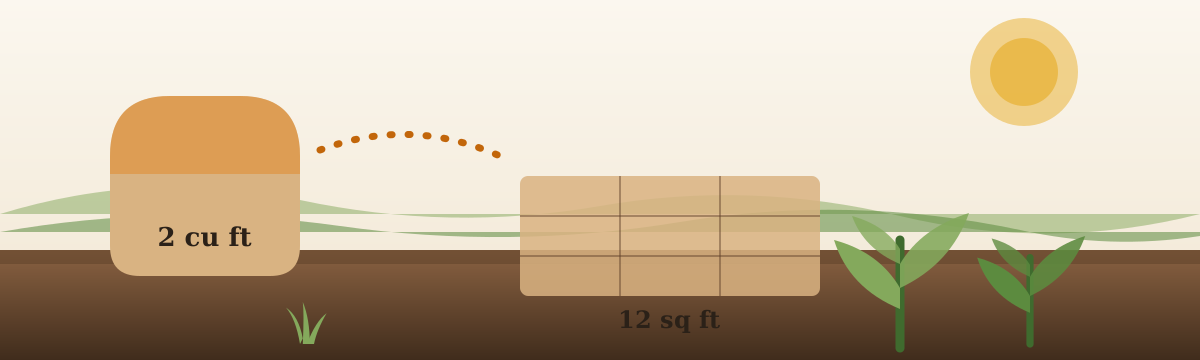
- Bags: cubic feet divided by the bag volume and rounded up, because half a bag is not something a shop will sell you. 26.67 / 2 = 13.3, so 14 bags.
As one line: cubic feet = length (ft) x width (ft) x depth (in) / 12. That is the entire calculation this page runs, and you can repeat it on a phone calculator in about fifteen seconds if you would rather check the number than trust it.
Example 1: 4 ft by 8 ft at 10 inches
A four by eight bed is standard for a reason: at four feet wide you can reach the middle from either side without stepping on the soil. The area is 32 sq ft, and ten inches of depth is 10 / 12 = 0.833 ft. So 32 x 0.833 = 26.67 cubic feet, which is 26.67 / 27 = 0.99 cubic yards, close enough to one yard that a bulk supplier will load it as a single scoop. Bags are 26.67 / 2 = 13.3, rounded up to 14. Bulk screened topsoil would weigh 0.99 x 1.2 = 1.19 tons. Fourteen bags is a cart and a half, and it fits in a hatchback in two runs.
Example 2: the same bed at 12 inches
Twelve inches is one foot, so the arithmetic collapses: 32 sq ft x 1 ft = 32 cubic feet, which is 1.19 cubic yards, exactly 16 bags, and 1.42 tons. The interesting number is the difference between the two depths. Going from ten inches to twelve adds 5.33 cubic feet, about two and a half bags, a fifth of the whole order for two inches of depth. Depth is the most expensive variable in the job, which is why it is worth settling before you buy rather than adding another board in June.
Example 3: 4 ft by 4 ft at 10 inches
A four foot square is 16 sq ft, half the area of the four by eight, so it takes half the soil: 16 x 0.833 = 13.33 cubic feet, or 0.49 cubic yards, or 7 bags once 6.67 is rounded up. Seven bags is a single trolley load, which is why small square beds are the easiest way to start a garden: no delivery, no wheelbarrow, no leftover heap. Two of them side by side hold exactly what one four by eight holds, and if one fails, a cracked board or a bad batch of mix, you are only replacing half the investment.
Why you stop filling about two inches below the rim
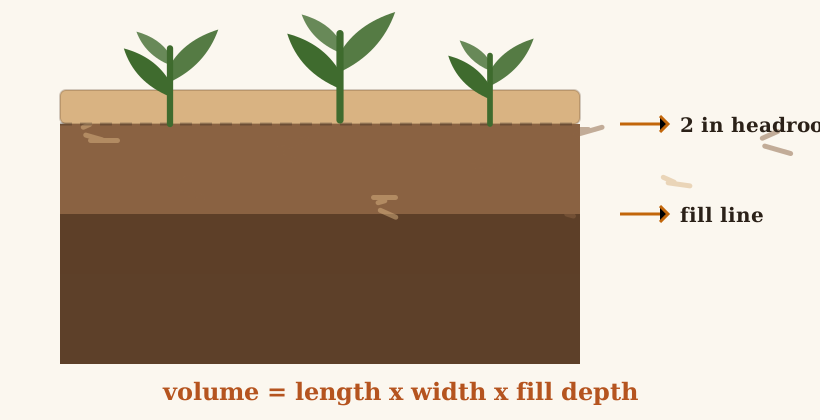
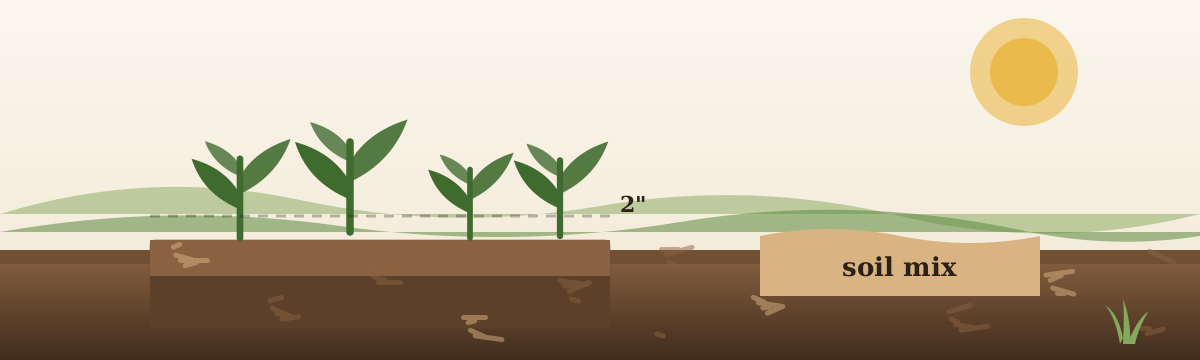
A bed filled level with the top board looks generous in the shop and behaves badly in the garden. Fresh mix is loose and full of air, and it settles: after the first few waterings and a month of wetting and drying, a bed filled to the brim typically drops an inch or more, leaving a crusted line on the timber and a rim of exposed soil. Filling to about two inches below the top buys four things. Rain and hose water stay inside the frame instead of running off and carrying mix over the edge, which is how beds end up with bare low corners and a mud stain on the path. There is room to scratch in compost next spring. Mulch has somewhere to sit. And water has a lip to pool against briefly, so it soaks in rather than sheeting sideways.
Those two inches are part of the bed's volume, not spare capacity, so when the calculator asks for depth, give it the depth of soil you actually want and not the height of the frame. A 10 inch frame filled to 8 inches holds 21.33 cubic feet rather than 26.67, and at 2 cubic feet per bag that is 11 bags instead of 14. Three bags is the cost of deciding late.
Topsoil, raised bed mix and potting soil are not interchangeable
The bags look similar and the prices do not, and the difference matters more in a confined box than it does in open ground.
- Topsoil: screened field soil, mostly mineral, cheap by the yard. It holds roots and water, but in a box it can compact toward brick, and its quality varies by supplier because nothing standard sits behind the word.
- Raised bed mix: topsoil blended with compost and usually some coarse material for structure. This is what most vegetable beds want, because it holds water without turning airless.
- Potting soil or container mix: soilless, built from peat or coir, bark and perlite. Light, fast draining, made for pots where a root ball dries quickly. It works in a bed, but it is expensive by volume, dries fast in a wide shallow box, and decomposes faster than a mineral mix.
For a bed sitting on open ground, the practical target is a mix that holds a squeeze but crumbles when you poke it, drains within an hour of a soaking, and does not set hard when it dries. Straight topsoil usually fails the third test and straight potting mix usually fails the first. A blend of the two plus compost is the usual compromise, and buying a bagged raised bed mix is simply paying someone else to make that blend for you.
Compost: blend it in and let drainage decide how much
Compost is not a soil substitute. It improves structure, holds water and releases nutrients as it breaks down, but a bed filled with compost alone collapses in volume within a season, holds too much water in a wet spring, and can push nutrient levels out of balance. Extension guidance on raised beds agrees on the principle and stays general on the number: blend composted material into the fill by volume rather than filling the box with it, and judge the result by drainage and roots rather than by hitting a fixed ratio.
Two checks settle it faster than any percentage. Squeeze a fistful of the finished mix: it should hold its shape briefly and break apart when prodded, not ooze water and not stay in a ball like clay. Then dig a test hole a spade deep in the filled bed, fill it with water and watch how long it takes to disappear; if water is still standing hours later, the mix needs more coarse material and less fine compost. Roots give the final verdict by the end of the first season. Pale, straight roots spreading through the bed mean the mix is working; a tight matted root ball sitting in a wet layer means it is not.
Topping up in year two and beyond
Every raised bed loses height. Some of it is settling, some is the compost fraction mineralising away, and some is soil leaving on roots and boots at harvest. The reliable way to size the top-up is a ruler rather than a formula: measure how far the surface has dropped below where you filled it and replace that depth across the same area, minus a little, because new material settles too. A bed that has dropped an inch over 32 sq ft wants about 2.7 cubic feet, which is one and a half bags, noticeable in the bag count and trivial in a wheelbarrow. Where the drop is uneven, spot-fill the low end first. A surface that is level holds water evenly, and one that is not will always have a dry corner and a drowned corner.
Bed size and depth chart
| Bed size | Soil depth | Cubic feet | Cubic yards | 2 cu ft bags |
|---|---|---|---|---|
| 4 x 4 | 6 in | 8.00 | 0.30 | 4 |
| 4 x 4 | 8 in | 10.67 | 0.40 | 6 |
| 4 x 4 | 10 in | 13.33 | 0.49 | 7 |
| 4 x 4 | 12 in | 16.00 | 0.59 | 8 |
| 4 x 8 | 6 in | 16.00 | 0.59 | 8 |
| 4 x 8 | 8 in | 21.33 | 0.79 | 11 |
| 4 x 8 | 10 in | 26.67 | 0.99 | 14 |
| 4 x 8 | 12 in | 32.00 | 1.19 | 16 |
| 4 x 10 | 10 in | 33.33 | 1.23 | 17 |
| 4 x 10 | 12 in | 40.00 | 1.48 | 20 |
| 4 x 12 | 12 in | 48.00 | 1.78 | 24 |
| 3 x 6 | 10 in | 15.00 | 0.56 | 8 |
| 2 x 8 | 10 in | 13.33 | 0.49 | 7 |
Figures are rounded the way a shop rounds: cubic feet and cubic yards to two decimals, bags up to the next whole bag. Bags round up and never down, because a bed that is half a bag short looks exactly like a bed that is one bag short.
Bags or tons: which number you actually order
The ton figure in the result exists for one specific purchase: bulk screened topsoil tipped off a truck. It uses 1.2 tons per cubic yard, a working weight for screened topsoil at ordinary moisture that drifts up in wet weather and down with a dry sandy load. Retail bagged soil is not sold by weight in any way that helps you. A 2 cubic foot bag is priced by volume, and the weight printed on it is for the courier, not your arithmetic. A pallet of bags weighing 1.19 tons is still 14 bags, and buying fifteen because the ton figure looked round is how garages fill up with half-used bags. If you do order bulk, ask whether their yard is a legal cubic yard or a scoop, because a scoop is not a unit.
Measure the bed you have, not the one on the plan
Timber is nominal. A 2 by 10 board is about 1.5 inches by 9.25 inches, so a frame stacked from three of them is not 30 inches tall, and a bed built from 2 by 8s holds less than the drawing says. Measure inside faces and real soil depth. If the ends taper or curve, break the bed into rectangles and add them. If it already holds soil, measure only the depth you are adding. Multiple beds add up fast: four beds of 4 by 8 at 10 inches is 106.7 cubic feet, four cubic yards, which is a delivery rather than a shopping trip.
What this calculator does not know
It assumes a rectangular box with vertical sides and a flat surface, and it adds a ten percent waste allowance on top of the answer because bags spill, boards settle and beds are never perfectly square. It cannot tell whether your mix arrives damp and compacted or dry and fluffy, and it cannot tell you whether the soil you are topping up is short of compost or short of grit. A soil test through your county extension office answers that for the price of a lab fee, and it is the only way to know what your bed is actually missing. For construction and fill guidance from a land-grant source, see Clemson Cooperative Extension: Raised Beds.