Potting mix is sold by the bag, and a bag is not a pot
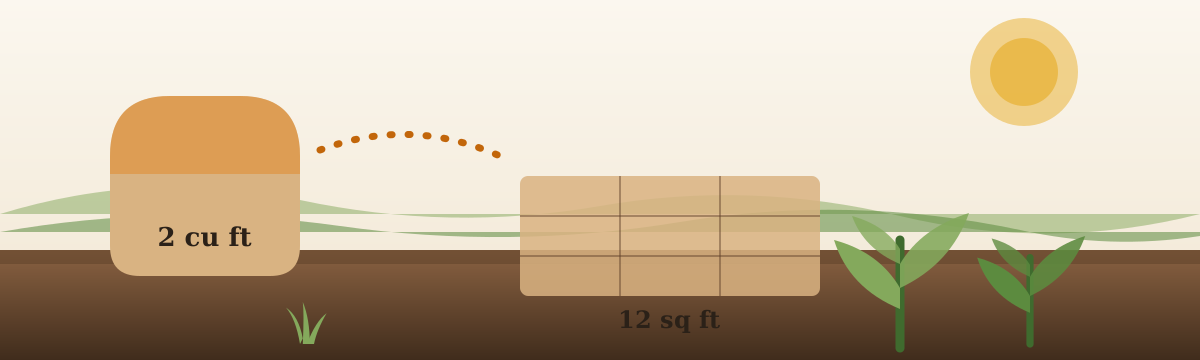
Filling containers is a volume problem with a nasty twist: the mix comes in bags measured in cubic feet, the pots are named in inches or gallons, and neither label says how many of one goes into the other. Enter the footprint of the container and the depth of mix you want, and this tool returns cubic feet, cubic yards, and the bag count at the three sizes that sit on a garden centre shelf: 1, 1.5 and 2 cubic feet. Counts round up, because a part bag in the shed is cheaper than a second trip.
There is deliberately no tonnage line here, and the reason is on this page rather than hidden: potting mix is so light and so variable in moisture that a ton figure would mislead more often than help. The section further down explains exactly why.
Why containers are counted pot by pot, not bed by bed
A raised bed is one continuous volume: measure it once, order once. Containers are the opposite — a dozen pots of four sizes, a planter box, a hanging basket, each with its own footprint and depth. The scale differs too: a 4 ft by 4 ft raised bed at 10 inches takes 13.3 cubic feet, a 12 inch pot takes 1. For containers the useful unit is the bag, and the useful habit is adding up pots rather than estimating in bulk.
The formula, and the three numbers it needs
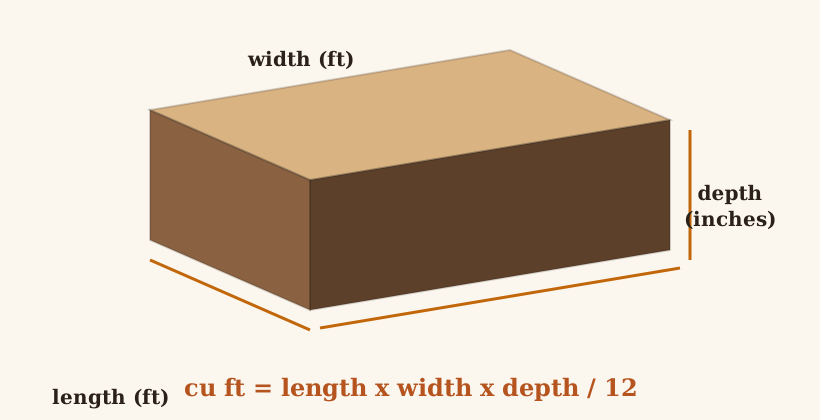
- Cubic feet = length in feet × width in feet × depth in inches ÷ 12
- Cubic yards = cubic feet ÷ 27
- Bags = cubic feet ÷ bag size, rounded up to a whole bag
- Round pots = the same sum on the diameter squared, then × 0.785 (which is π ÷ 4)
That last line is the only concession to geometry on this page. The calculator itself works on rectangles, because a footprint in feet times a depth in inches is all it needs; a round pot of the same diameter simply holds 78.5% of the square box drawn around it, so the square answer gets multiplied by 0.785 to stay honest.
Worked example: ten 12-inch pots
Ten square pots, twelve inches on each side, filled twelve inches deep: footprint ten square feet, depth twelve inches, so the calculator is given 10, 1 and 12. It returns 10 cu ft, 0.37 cubic yards, 10 bags of 1 cu ft, 7 bags of 1.5 cu ft or 5 bags of 2 cu ft, plus its own reminder to add about ten percent for waste.
Round pots of the same diameter are the common case in a garden centre, and they hold less: 0.785 of the square volume, 7.85 cubic feet for ten. Entering 7.85 square feet at twelve inches deep returns 7.85 cu ft, 0.29 cubic yards, 8 bags of 1 cu ft, 6 of 1.5 cu ft and 4 of 2 cu ft. The gap between the square and round answers is two small bags — the sort of shortfall that sends people back to the shop mid-job.
Worked example: a 4 ft by 2 ft planter box at 10 inches
A planter box four feet long, two feet wide, ten inches of mix. Given 4, 2 and 10 the calculator returns 6.67 cu ft, 0.25 cubic yards, 7 bags of 1 cu ft, 5 of 1.5 cu ft or 4 of 2 cu ft. Boxes are the easiest containers to be accurate about — no taper, no rim allowance — so measure inside length and width, decide the depth below the rim, and trust the tool.
Worked example: how many pots one cubic yard fills
Bulk buying is rare for potting mix, but the comparison matters when a landscaper quotes by the yard. One cubic yard is 27 cubic feet, which the calculator confirms when given 9 ft by 3 ft at 12 inches: 27 cu ft, 1 cubic yard, 27 bags of 1 cu ft, 18 of 1.5 cu ft, 14 of 2 cu ft. Divided by the volume of one container, that yard fills:
- 6-inch square pots (0.13 cu ft each) — 216 pots; as round pots (0.1 cu ft) 275
- 10-inch square pots (0.58 cu ft) — 46 pots; as round pots (0.45 cu ft) 59
- 12-inch square pots (1 cu ft) — 27 pots; as round pots (0.79 cu ft) 34
- 14-inch square pots (1.59 cu ft) — 17 pots; as round pots (1.25 cu ft) 21
Measuring a pot you already own
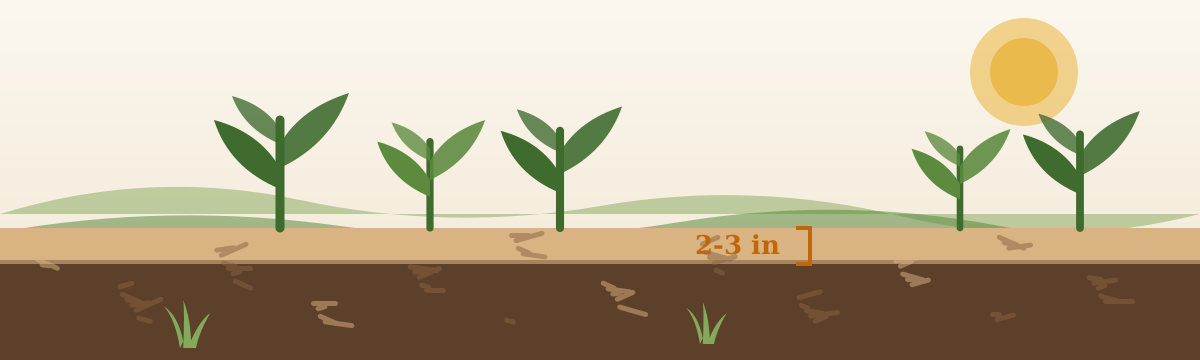
Use inside dimensions, not outside: the plastic is a quarter inch thick on a cheap pot, half an inch on a big one, and the error runs the same way twice. Leave an inch of headspace below the rim so water does not sheet over the side, and subtract it from the height. Nursery pots taper, so measure the diameter halfway up rather than at the rim, which overstates the volume by a margin that grows with the taper.
Drainage layers cost you mix, not water
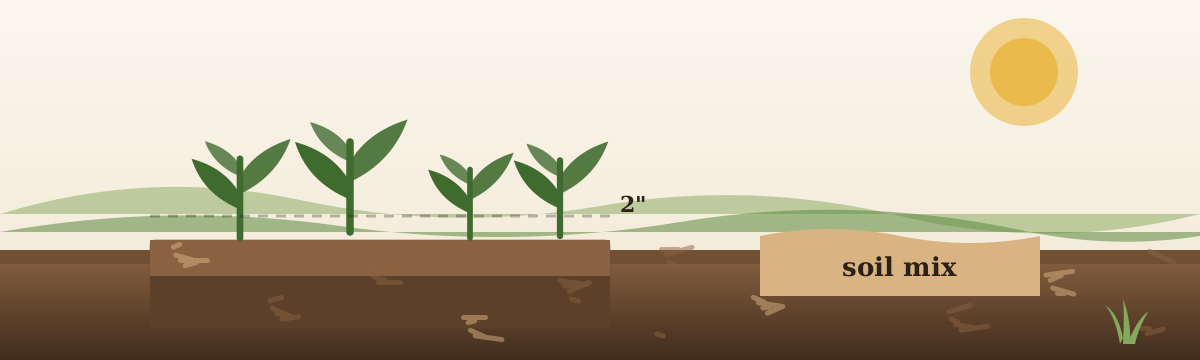
Filling the bottom of a pot with gravel, crocks or polystyrene is the most common way to waste potting mix, and it does not improve drainage. Water leaving fine mix does not speed up on reaching a coarse layer: it percolates until the fine layer above is nearly saturated, so the gravel raises the saturated zone into the root space. What the layer reliably does is displace mix — an inch of gravel in a twelve inch pot takes 8.3% of its volume, which on the ten pot example is most of a cubic foot. Cover the hole with mesh and fill with mix.
Old mix: what to replace, and how much
Potting mix is mostly organic matter, and organic matter decomposes. Over a season the particles break down, the pores close, and the volume in the pot drops visibly — which is why last year's mix looks a third shallower this spring with nothing removed. For ornamentals, take out the top third and replace it: structure and nutrients come back without a full refill. For vegetables in small pots, replace the lot, because nutrients are spent and tap water salts have built up. In five gallon containers and up, the top half is usually enough.
- Never reuse mix from a plant that died of disease — the pathogens are still in it, and no amount of fertiliser fixes that
- Do not top up with garden soil — it compacts in a container and holds water in pores too small for roots to breathe in
- Break up the root ball before refilling — new mix around an old solid root mass drains unevenly and the plant stays root bound
Why this page gives no tonnage
Every other volume page here offers a ton figure, because compost, mulch and topsoil have roughly stable density. Potting mix does not. University of Maryland Extension puts a typical soilless mix at about ten pounds per cubic foot against seventy-five for real soil, so a cubic yard of mix is around 270 pounds dry, under a seventh of a yard of soil. Wet it down and it gains water weight fast, and blends differ in how much they hold — a range too wide to plan a delivery or load a truck. Buy potting mix by volume, never by weight.
Bag volume, pot volume, and the ten percent that goes missing
Bag labels are volume, but the units move around. A cubic foot is 1,728 cubic inches, which is 25.71 US dry quarts or 7.48 US liquid gallons, so a two cubic foot bag is about 51 dry quarts. A five gallon bucket holds 0.67 cubic feet by the same arithmetic, and 2 ÷ 0.67 = 2.99 — which is why the standard advice is that a two cubic foot bag fills three buckets, exactly as University of Maryland Extension says.
Loose mix also settles. A bag that measured two cubic feet in the factory has been compressed by the stack, and once tipped out and watered in, the pot takes more than the arithmetic suggests. Add ten percent, the reminder the calculator prints, and do not tamp the mix down: filling to level and watering in gives the density plants want, while pressing it down destroys the air pore space the mix was bought for.
What belongs in a bag labelled potting soil
Despite the name, packaged potting soil usually contains no soil at all. It is a soilless blend, and that is on purpose: the point of the blend is to hold water while staying aerated, with pore space somewhere between half and four fifths of the volume. Garden soil in a container does the opposite, collapsing into a dense mass that roots cannot push through and water cannot drain from.
- Peat moss or coir — the water holding base, and the reason a dry bag can be hard to wet again
- Perlite, vermiculite or bark — the coarse fraction that keeps pores open under watering
- Compost — a modest slow supply of nutrients and biology, not a substitute for feeding in a small pot
- Lime and a wetting agent — peat is acidic and hydrophobic when dry, so most mixes carry both
Where these figures come from
- University of Maryland Extension, Growing Vegetables in Containers and Salad Tables — soilless media, bag to bucket conversions, and the weight difference between mix and soil
- Wisconsin Horticulture, Container Gardening — container sizing, media choice and watering
- Clemson University HGIC, Container Vegetable Gardening — depth requirements by crop and container selection
- University of Arkansas Extension, Container Gardens (FSA-6007) — filling, drainage and reuse of container media
Every figure on this page is either the calculator engine output or an arithmetic conversion from it, and the bag, weight and pore space guidance above comes from the four extension sources in that list. Cross-checked against the live engine on 26 October 2026. Bag sizes and blends vary by brand, so read the label on the bag you are actually buying before ordering a quantity.